
Why AMC Entertainment (AMC) Stock is Currently Trading Lower
12/02/2026
Understanding the Recent Decline in AMC Entertainment Stock Price
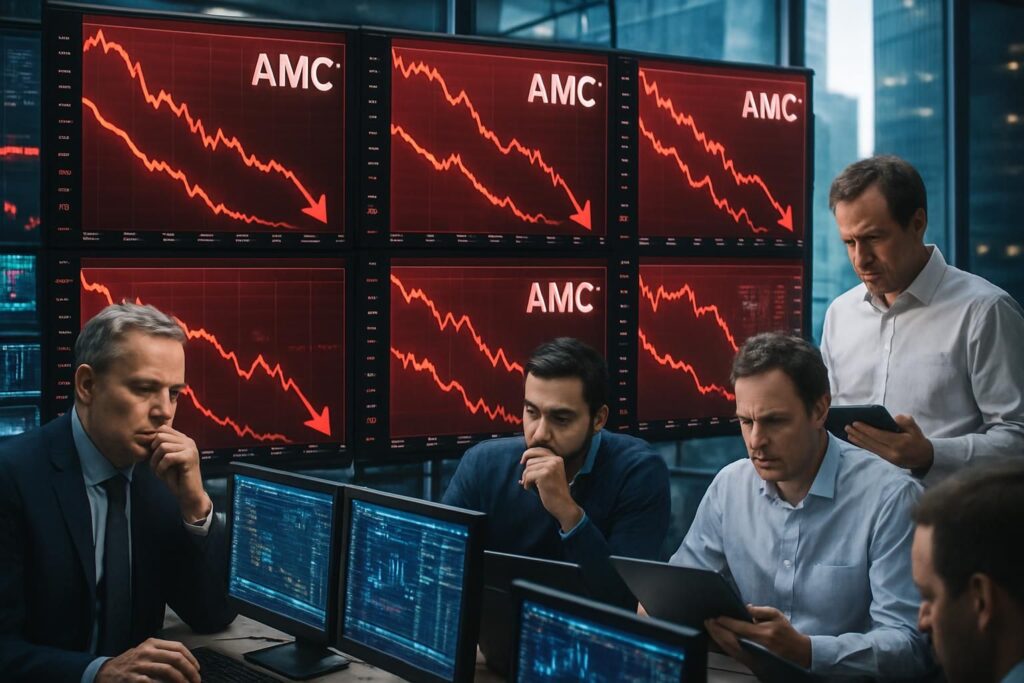
AMC Entertainment’s stock price recently experienced a notable decline, dropping by 8.1% during the morning trading session. This downturn followed the company’s announcement of an agreement to sell up to $150 million of its Class A common stock through an “at-the-market” (ATM) program. An ATM program allows a company to sell shares incrementally into the open market rather than issuing a large block all at once. While this approach offers flexibility in raising capital, it also increases the total number of shares outstanding. Consequently, this share dilution often exerts downward pressure on the stock price, as existing shareholders experience a reduced ownership percentage.
AMC’s decision to utilize an ATM program is directly tied to its strategic aim to bolster its financial position. According to the supplementary details provided in their SEC filing, the net proceeds from this share sale are intended to improve liquidity and assist in repaying or refinancing existing debt. This indicates AMC's focus on strengthening its balance sheet amid ongoing market pressures.
A lire également : Miami Beach Unveils Bold Deregulation Plan to Revitalize Restaurants and Entertainment in Struggling Commercial Areas
The market’s reaction to this news reflects investor sentiment and highlights the complex interplay between immediate capital needs and shareholder value concerns. While raising funds through equity issuance can provide a necessary financial cushion for AMC Entertainment, the perception of dilution among investors often leads to hesitation and, in turn, a decline in trading value. This phenomenon underscores why AMC’s stock is trading lower despite the proactive financial management steps the company is undertaking.
One must consider that the stock market tends to overreact to news—particularly when it involves financing activities perceived to weaken existing shareholder stakes. However, such sell-offs can sometimes unveil buying opportunities for value investors willing to look past ephemeral volatility and focus on fundamental business prospects. For instance, although AMC’s stock dropped sharply after this announcement, its long-term viability depends on factors extending well beyond short-term dilution concerns.
Avez-vous vu cela : Miami Beach Unveils Bold Deregulation Plan to Revitalize Restaurants and Entertainment in Struggling Commercial Areas
Examining recent stock volatility, AMC Entertainment has demonstrated extremely volatile behavior, with at least 25 movements exceeding 5% in either direction within the past year. This volatility reflects a market that is sensitive to news and broader trends affecting the movie theater industry. In this light, today's stock drop seems to be an important but not necessarily transformative event, signaling that investors view the ATM program as significant but not business-changing.
Financial Performance and Market Analysis of AMC Entertainment
The financial performance of AMC Entertainment remains a critical factor shaping market analysis and investor sentiment. Despite the recent drop in stock price, the company’s operational metrics offer a nuanced view that can help explain current trading dynamics.
AMC’s recent earnings reports reveal a mixed performance. On one hand, the company saw encouraging upticks in box office attendance tied to high-profile film releases such as the sequel to the iconic “Avatar” franchise. The release of "Avatar: Fire and Ash" was accompanied by a surge in attendance, with over 4 million guests during a strong pre-Christmas weekend and $88 million generated domestically. Globally, the film amassed approximately $345 million during its opening weekend, underscoring AMC’s ability to capitalize on blockbuster content and significant movie-going events.
Additionally, AMC’s innovative approach to leveraging pop culture helped bolster customer engagement. For example, AMC hosted special screenings of the “Stranger Things” series finale, attracting over 753,000 viewers. Such events create alternative revenue streams and deepen consumer loyalty, an important consideration amidst ongoing competition from streaming services and shifting entertainment consumption habits.
Nevertheless, these positive trends coexist with long-term financial challenges that dampen investor enthusiasm. Chief among these are concerns related to AMC's debt levels and overall liquidity position. The decision to access capital markets through stock sales rather than debt issuance highlights a strategic desire to reduce leverage in the company’s capital structure—a signal of caution to investors.
Investors weighing AMC’s financial performance must therefore balance these promising operational signals with the risks posed by an elevated debt load, fluctuating box office revenues, and intense competition. The recent stock volatility encapsulates this tension, making AMC a polarizing stock for short-term traders and long-term holders alike.
Investor Sentiment and Risk Factors Behind AMC’s Stock Volatility
Investor sentiment plays a pivotal role in explaining why AMC Entertainment stock continues trading lower despite intermittent spikes. The theater company’s unique position within the movie theater industry exposes it to distinct investment risks that amplify price fluctuations. Sentiment is influenced not only by company-specific developments but also by broader market trends and the evolving entertainment landscape.
Firstly, AMC’s stock is classified as highly volatile. Over the past year alone, it experienced at least 25 price changes exceeding 5%, highlighting the dynamic and unpredictable nature of the stock. This volatility emerges from several sources:
- Capital Raising Activities: Programs such as ATM share offerings introduce dilution risks, which investors view warily.
- Market Speculation: The presence of retail investors and speculative trading around AMC has amplified price swings through momentum-driven buying and selling.
- Industry Disruptions: Streaming platforms, shifting consumer preferences, and ongoing global economic uncertainties introduce fundamental uncertainties in revenue forecasts.
Moreover, concerns regarding investment risks are heightened by AMC’s debt position and the potential for future equity or debt issuances. The fear among investors is that continuous financing needs could further degrade share value through dilution or credit stress.
Such investor apprehension is compounded by related market signals. Despite promising box office results with films like “Avatar: Fire and Ash,” and special events such as “Stranger Things” screenings, AMC’s share price remains approximately 65.7% below its 52-week high of $4.01. Since the beginning of the year, AMC has dropped 14.6%, reflecting cautious optimism tempered by skepticism about long-term sustainability.
This complex investor sentiment explains why the stock price is currently trading lower, even as operational positives occasionally surface. For traders and investors alike, understanding the nuanced balance between opportunity and risk is critical when considering AMC Entertainment stock.
How the Movie Theater Industry’s Shifts Impact AMC Entertainment’s Stock
The broader movie theater industry is undergoing a fundamental transformation, which directly affects AMC Entertainment’s financial health and, by extension, its stock price. Understanding these industry dynamics is essential to grasp why AMC’s stock is trading lower and what this means for future investment prospects.
Technological innovation and changes in consumer behavior have transformed how audiences consume entertainment. The rise of streaming platforms, especially in the aftermath of the pandemic, has reshaped expectations. Consumers now have easy access to new releases from the comfort of their homes, undermining traditional theater attendance.
However, AMC has strived to adapt by making theaters experiences more appealing — for example, hosting exclusive events like “Stranger Things” episode premieres and investing in premium amenities. These initiatives aim to attract audiences craving experiences they cannot replicate at home.
Nonetheless, the industry continues to face persistent challenges:
- Box Office Dependence: Even strong opening weekends tied to blockbusters like "Avatar: Fire and Ash" cannot entirely compensate for inconsistent attendance during off-peak periods.
- Competitive Streaming Landscape: Services continue to invest heavily in original content and simultaneous releases, which can decrease theater exclusivity.
- Debt-Laden Companies: Many theater chains carry significant debt burdens, causing vulnerability to economic fluctuations and cost pressures.
- Changing Audience Preferences: Younger generations may prioritize interactive or digital forms of entertainment over traditional cinema visits.
Each of these factors filters into investors’ perceptions of AMC’s prospects and contributes to the pressure on its stock price. While AMC’s financial maneuvers, such as the ATM offering, seek to navigate this complex environment, the challenges facing the movie theater industry continue to weigh on investor confidence.
Evaluating Long-term Investment Potential Amidst AMC’s Current Market Challenges
Looking beyond the immediate factors contributing to AMC Entertainment stock trading lower, it is important to evaluate the long-term investment potential amidst ongoing market challenges and volatility.
Over the past five years, AMC’s stock has underperformed drastically. An investor who purchased $1,000 worth of AMC shares five years ago would now find their investment worth approximately $28.33, illustrating a substantial decline. This prolonged underperformance primarily stems from debt pressures, dilution concerns, and disruptive changes within the entertainment sector.
That said, identifying platform winners early in changing industries has historically rewarded patient investors. For instance, a noted 1999 book—Gorilla Game—correctly anticipated that Microsoft and Apple would later dominate tech by embedding new platforms early. Drawing a parallel, today’s enterprise software firms integrating generative AI technologies are considered the new “gorillas.”
Within the entertainment sector, companies like AMC are at a crossroads. Strategic initiatives such as capital restructuring and exclusive content experiences aim to position the company for recovery and growth. However, the inherent investment risks and stock volatility suggest that prospective investors should approach AMC stock with caution, undertaking thorough market analysis and considering their risk tolerance carefully.
Key considerations for potential investors include:
- Balance Sheet Strength: Monitoring AMC’s ongoing ability to manage and reduce debt.
- Content Strategy: Evaluating the success of exclusive screenings and blockbuster film tie-ins.
- Industry Trends: Staying informed on shifting consumer behaviors and technological disruptions.
- Market Sentiment: Being mindful of speculative trading and volatility inherent in AMC’s stock.
In summary, AMC Entertainment’s current trading lower reflects a multifaceted interaction of financial, operational, and market factors. Investors considering this stock should weigh these forces carefully, remaining vigilant about both the challenges and opportunities inherent in this evolving industry landscape.
